A Confessing Church
The Barmen Declaration

May 31, 1934
After his radio address on “the Fuhrer Principle,” Dietrich Bonhoeffer watched Germany transform from a struggling democracy to a totalitarian dictatorship.
After the German parliament (Reichstag) building was burned on February 27, Hitler persuaded President Hindenburg to declare an emergency and suspend normal civil liberties, including freedom of the press, speech, and assembly.
On March 23, the parliament passed the Enabling Act, giving Hitler the power to enact laws without parliamentary approval, making him the dictator.
In March, the first concentration camp was established at Dachau to detain policital opponents, arrested by paramilitary groups. They used abandoned factories and warehouses to house prisoners.
In May, all political parties other than the Nazi party, were banned.
On June 30, Hitler purged all members of the Nazi party who demonstrated socialist views, assassinating leading members.
After Hindenburg died on August 2, Hitler abolished the office of President.
Hitler then required all members of the and civil government to take a personal oath of loyalty to him.
The rise of the Nazi party in Germany had an immediate effect on the German church. The church began to split between those who chose to comply with the Nazi agenda, including nationalism and racism, and those who sought ways to resist. The Nazi Party Platform had included a pro-Christian statement: “The Party…stands for positive Christianity.” Most of the 40 million Protestant Christians were members of the German Evangelical Church. The church viewed itself as one of the pillars of German culture and society. With the rise of Nazi power, prominent leaders of the church defined themselves as “German Christians” and embraced many aspects of Nazi ideology. They supported the Nazi party and the government of Hitler, and eventually adopted a “nazified” version of Christianity, resulting in a rejection of the authority of the Old Testament and the Pauline epistles. In the end, the German Christians defined themselves as an Aryan religion at war with Judaism.
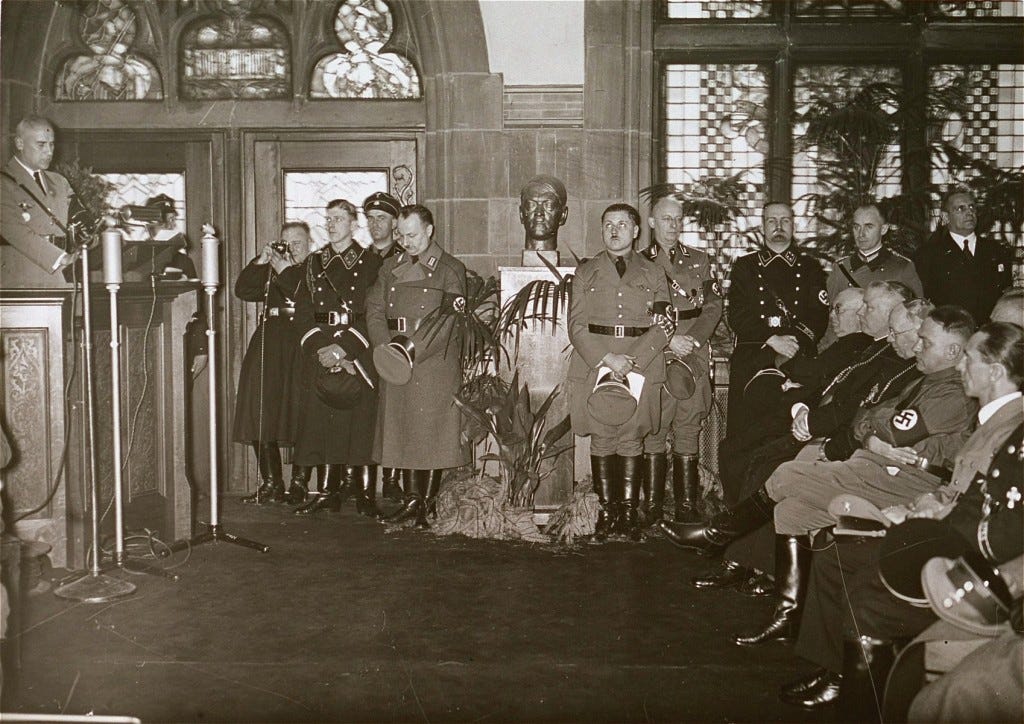
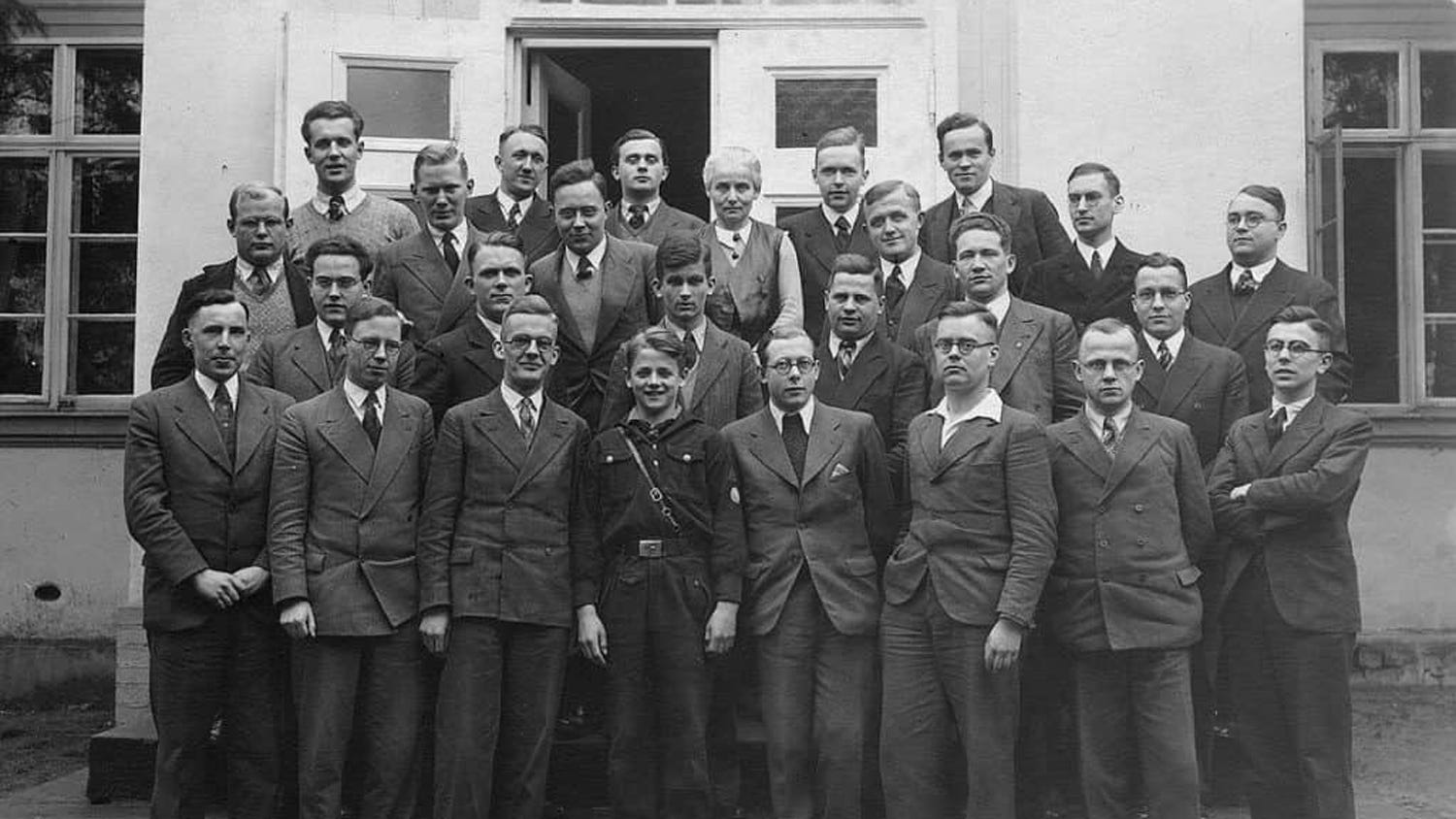
By the end of 1933, German pastors led by Martin Niemoller formed the “Pastors Emergency League” to protest the pro-Nazi changes taking place in the German church. In 1934, pastors who opposed the nazified German Christians formed a “Confessing Church.” The purpose of the Confessing Church was to profess the true Christian faith in opposition to the German Christians. Prominent members of the Confessing Church included Martin Niemoller, Dietrich Bonhoeffer, and Karl Barth. The Confessing Church remained within the German Evangelical Church while pursuing ways and means of counteracting attempts by the Nazi government to interfere in church matters. Some also hid Jewish people from arrest by the Nazis.
On May 31, 1934, delegates from the Confessing Church gathered at a Synod in Barmen, Germany, to issue a theological statement that opposed the nazification of the German Church. This confession still seems relevant today. It set forth six theses:
Thesis 1: Jesus Christ, as he is attested for us in Holy Scripture, is the one Word of God which we have to hear and which we have to trust and obey in life and death. In this statement, the Confessing Church rejected the idea that an idea, event, power, or leader, could be a source of God’s revelation.
Thesis 2: As Jesus Christ is God’s assurance of the forgiveness of all our sins, so in the same way and with the same seriousness is he also God’s mighty claim upon our whole life. The Declaration rejected the possibility that any of life could be under any other lord. A “cult of personality” was rejected as false.
Thesis 3: The Christian Church is the congregation of the brethren in which Jesus Christ acts presently as the Lord in Word and Sacrament through the Holy Spirit. Demands that the Church abandon its form or message are to be rejected.
Thesis 4: The various offices in the church do not establish a dominion of some over the others; on the contrary, they are for the exercise of the ministry entrusted to and enjoined upon the whole congregation. The idea that the church can be vested with special leaders with ruling powers was rejected.
Thesis 5: Scripture tells us that, in the as yet unredeemed world in which the church also exists, the State has by divine appointment the task of providing for justice and peace. The Confessing Church rejected the idea that the State could become the single and totalitarian order of the human life.
Thesis 6: The church’s commission, upon which its freedom is founded, consists in delivering the message of the free grace of God to all people in Christ’s stead. The idea that the church could place its unique identity and mission in the service of other chosen desires, purposes, and plans, was rejected.
Leaders of the Confessing Church continued to exercise influence in Germany. Dietrich Bonhoeffer formed an unofficial seminary at Finkenwalde in 1935. They consistently defied the “Aryan Paragraph” of the German Christians. Pastors used their pulpit to criticize Nazi religious policies. In the end, hundreds of pastors were sent to concentration camps. After the war, the leaders of the Confessing Church played a crucial role in the spiritual and structural reconstruction of Germany and the German Evagelical Church.
At the same time, the rule of the Nazi Party became increasingly authoritarian and totalitarian. In 1934, they formed the “People’s Court” made up of hand-picked judges in order to subvert the independence of the legal system. The Gestapo expanded their control of the law enforcement system. In 1935, Jews were stripped of all citizenship rights, and in 1938, Jews were forced out of participation in the economy. The Nazi government used heavy deficit spending to engage in massive building projects and began to annex surrounding territories.
However, it should never be forgotten that the Nazi Party and Adolf Hitler could not have come to power without the specific authorization of the German parliament. Hitler’s cult of personality would also have not been possible without the German church’s willingness to compromise its identity and mission.
The lessons of the German Christian Church and the principles of the Barmen Declaration continue to have relevance and deep significance. May the claim that, “the only thing we learn from history is that we never learn anything from history,” not be true in our generation.